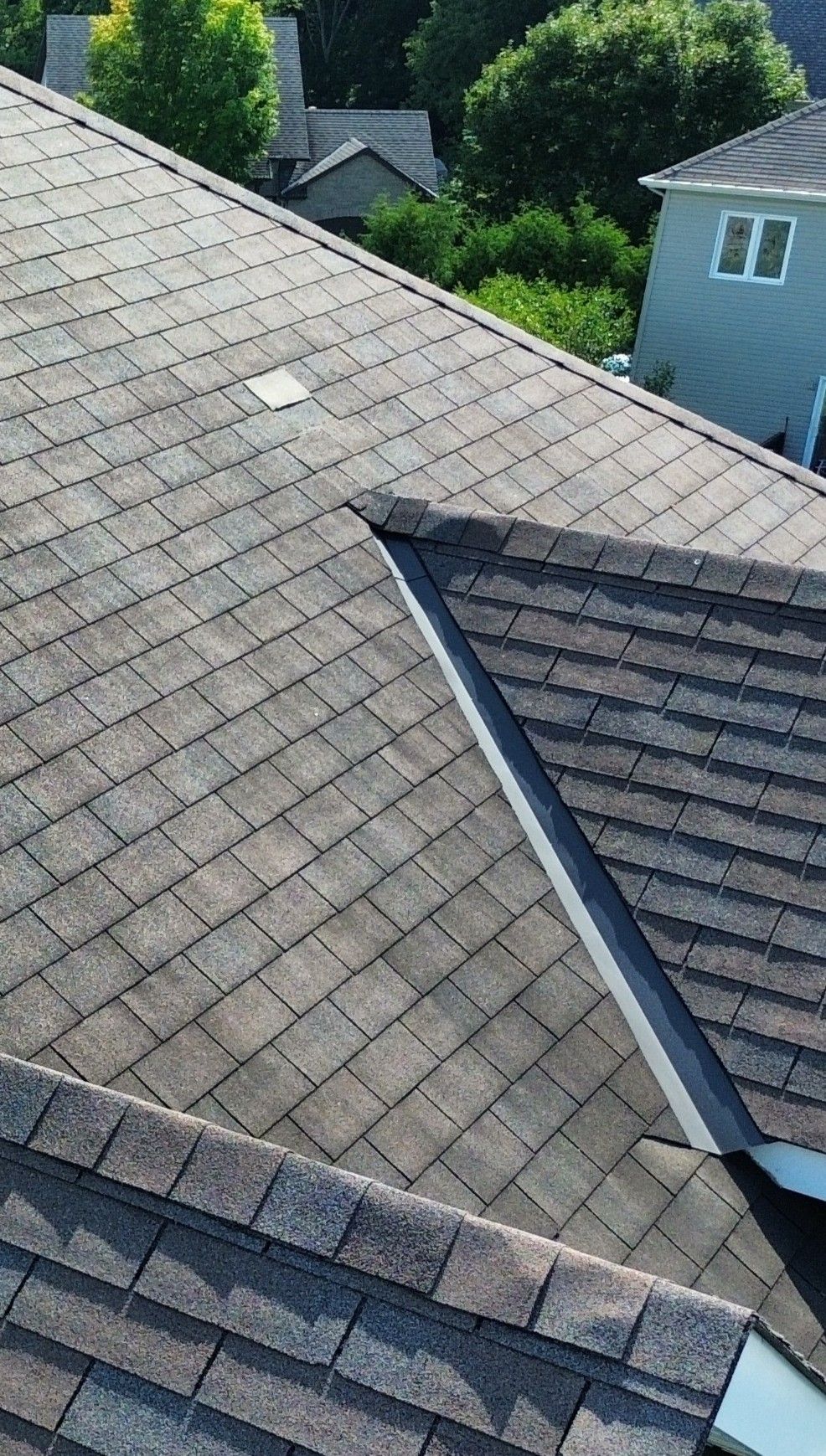
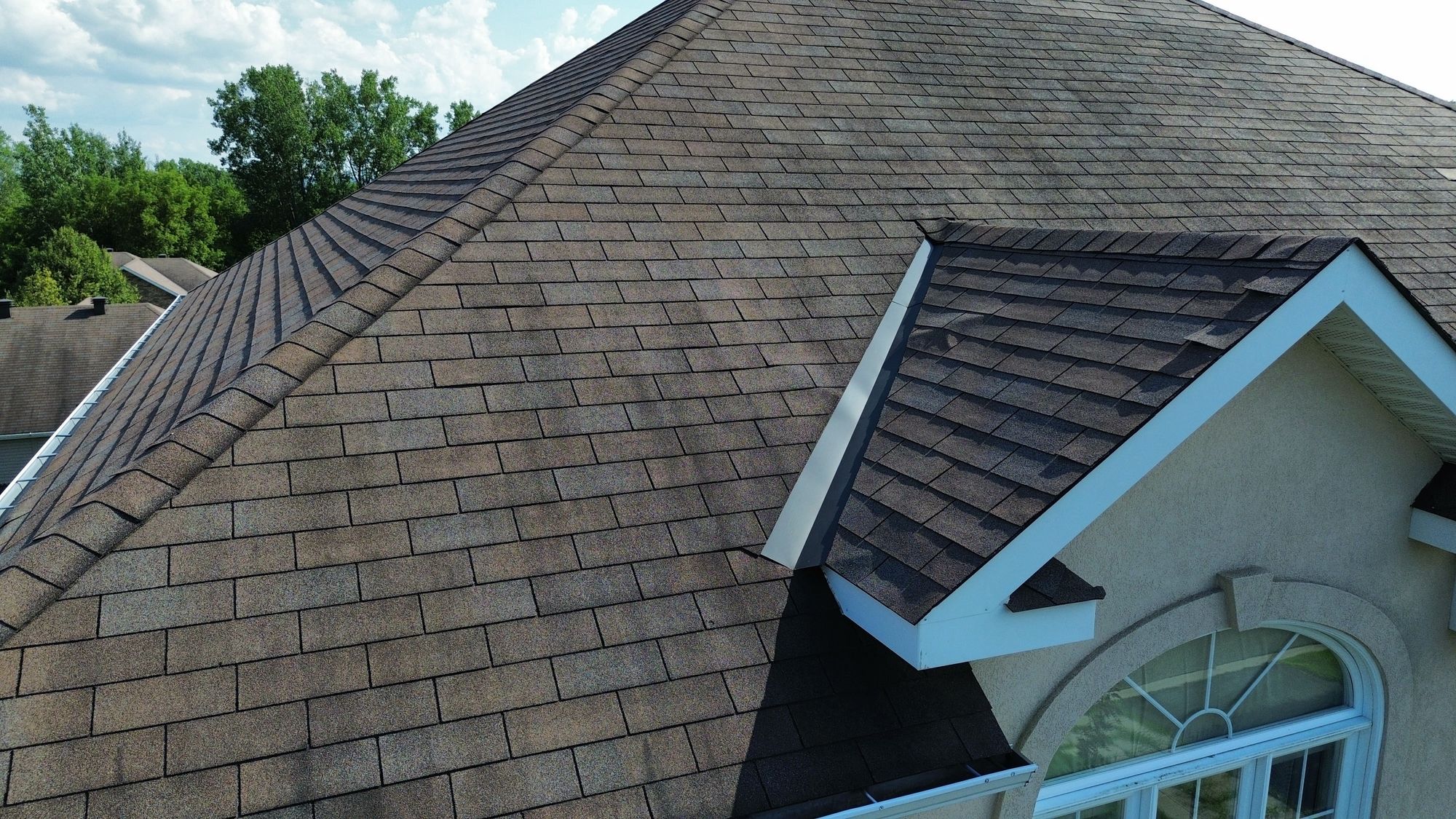
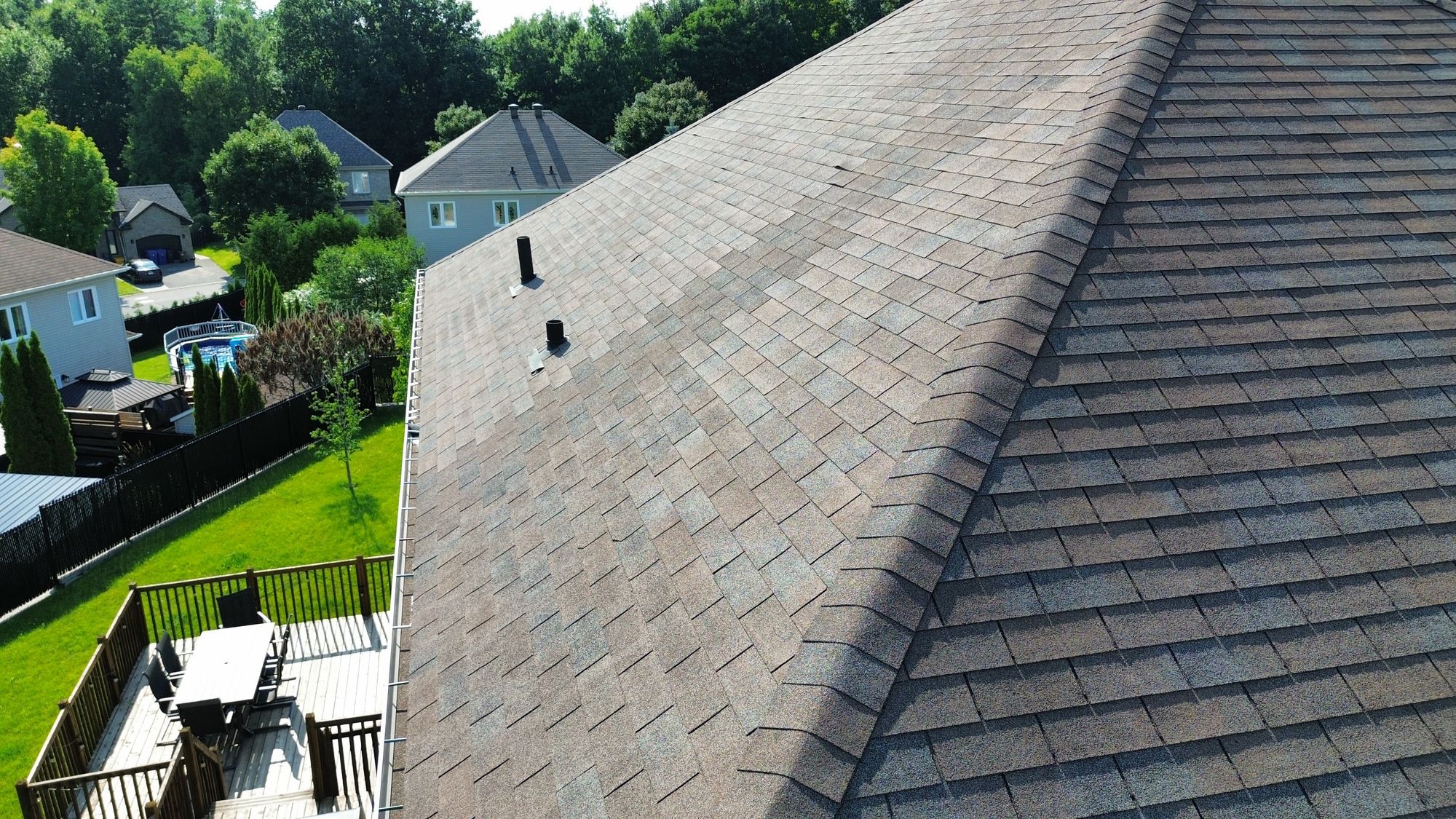
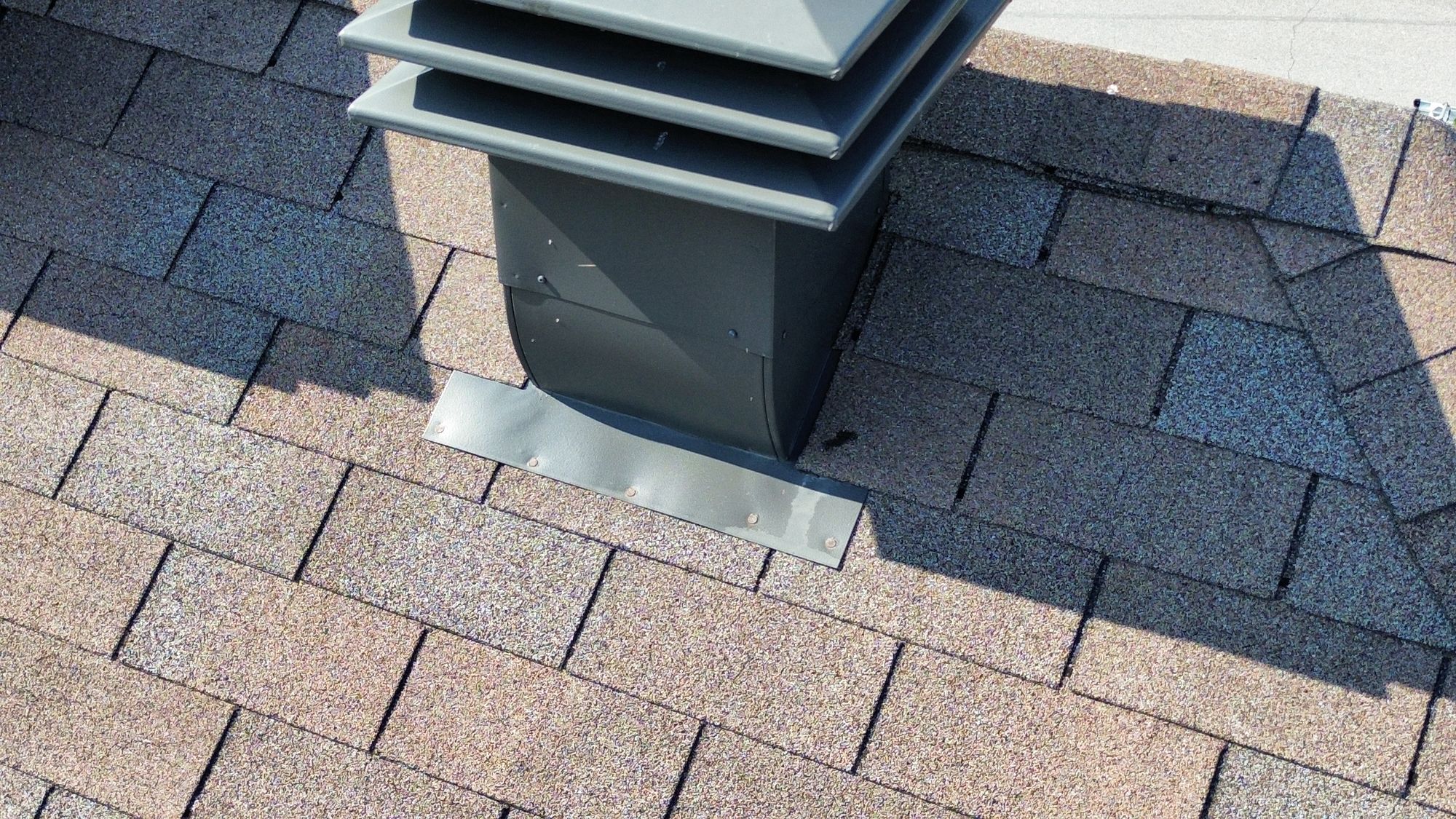
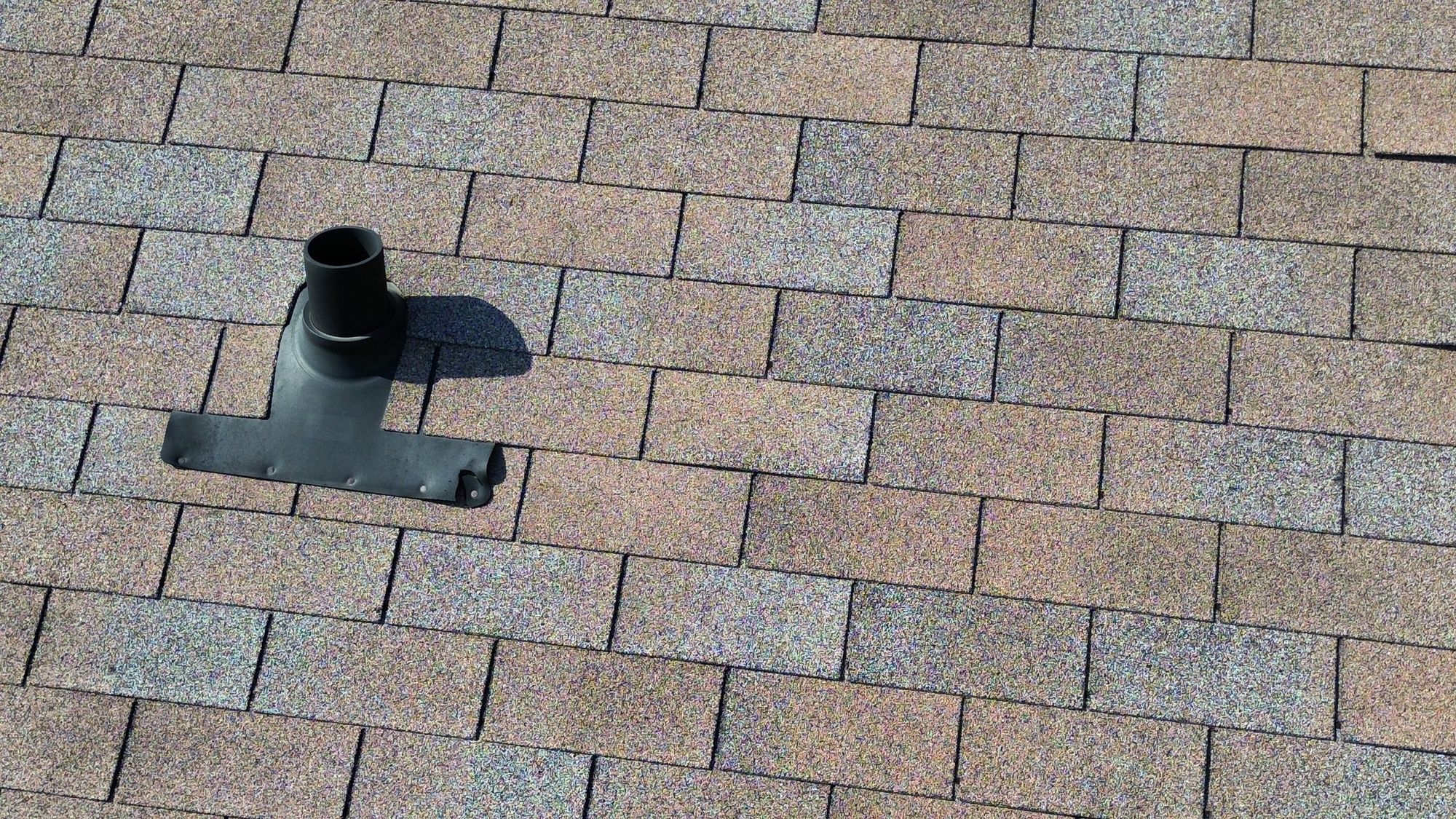
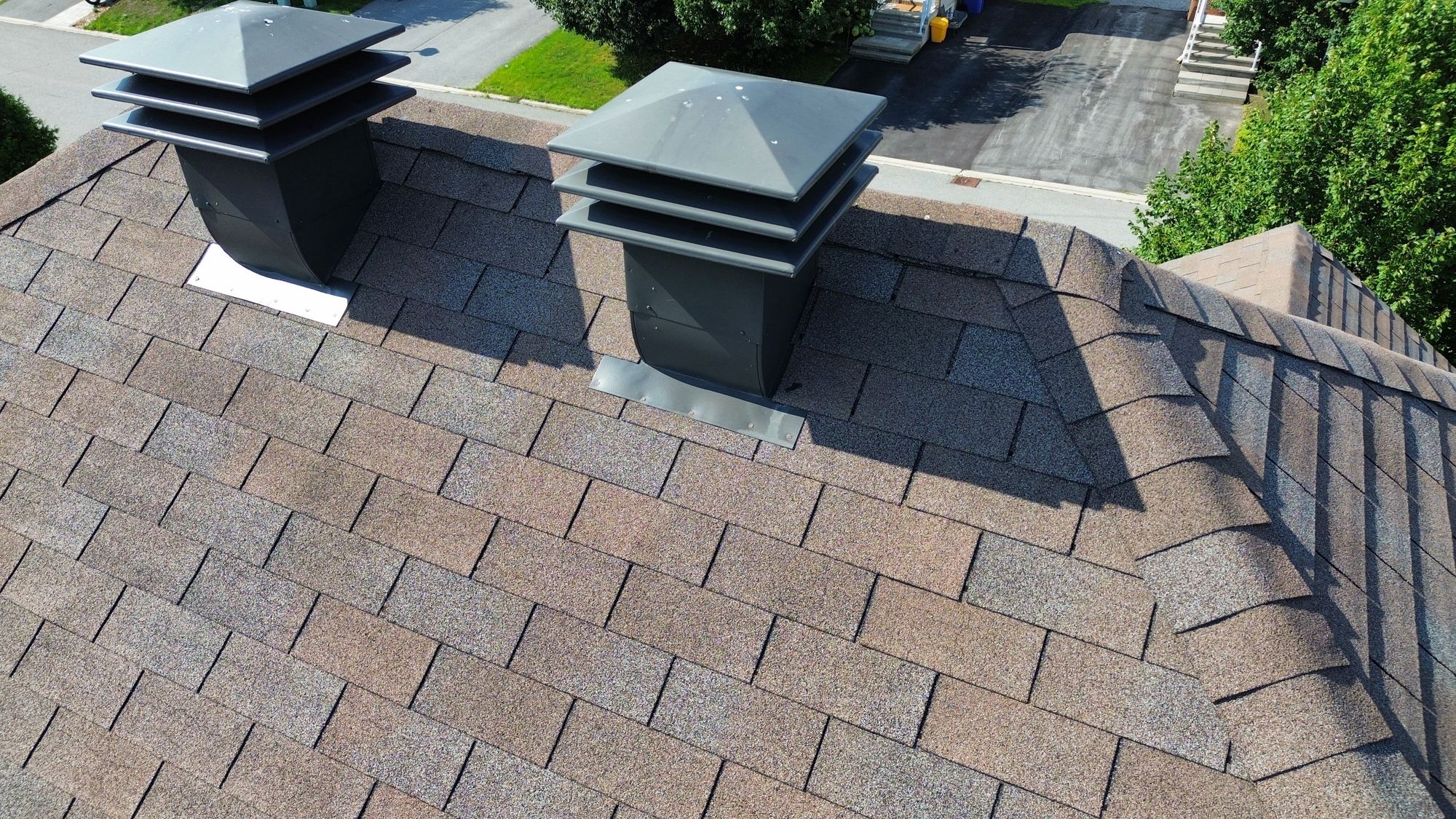
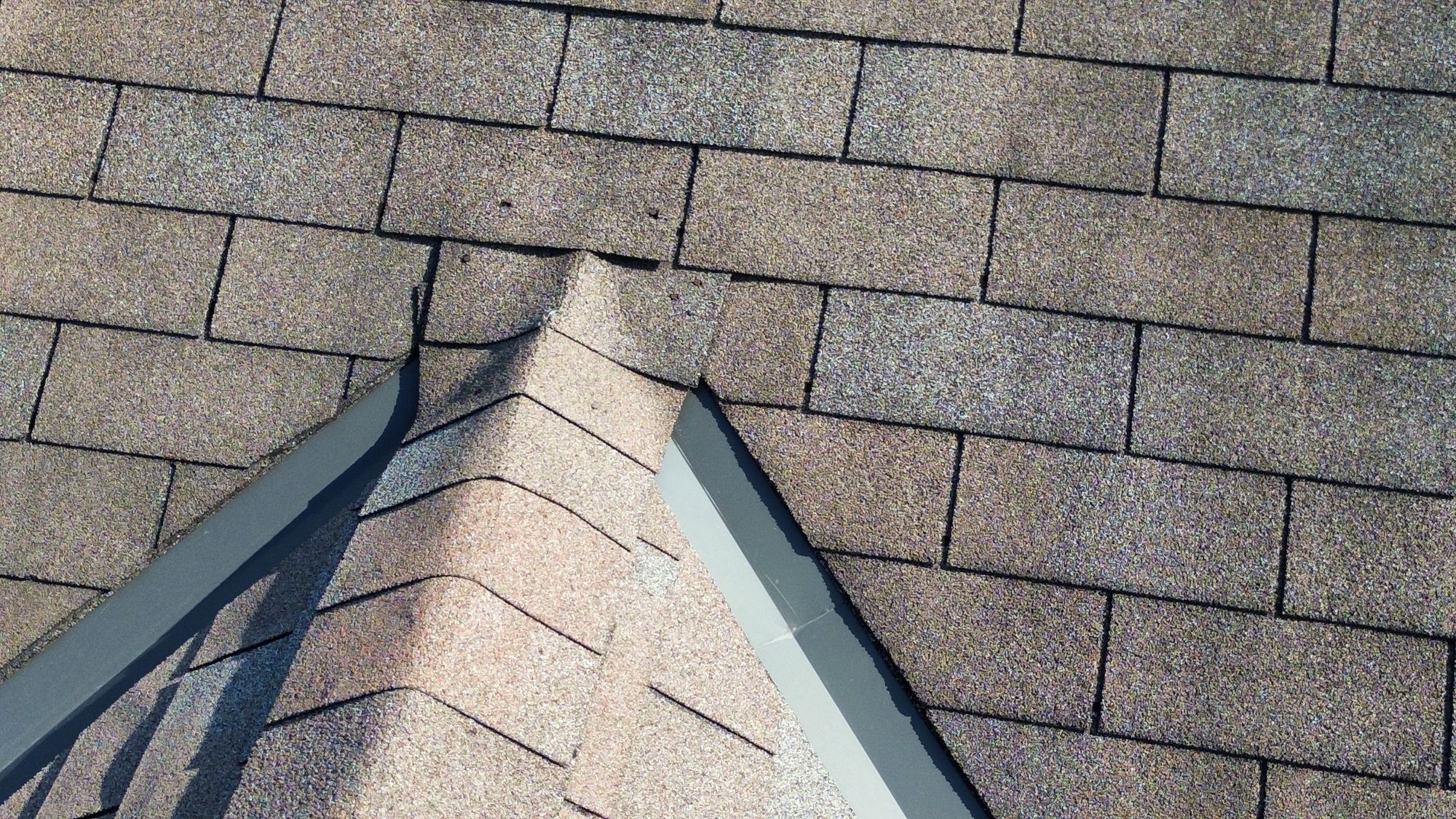
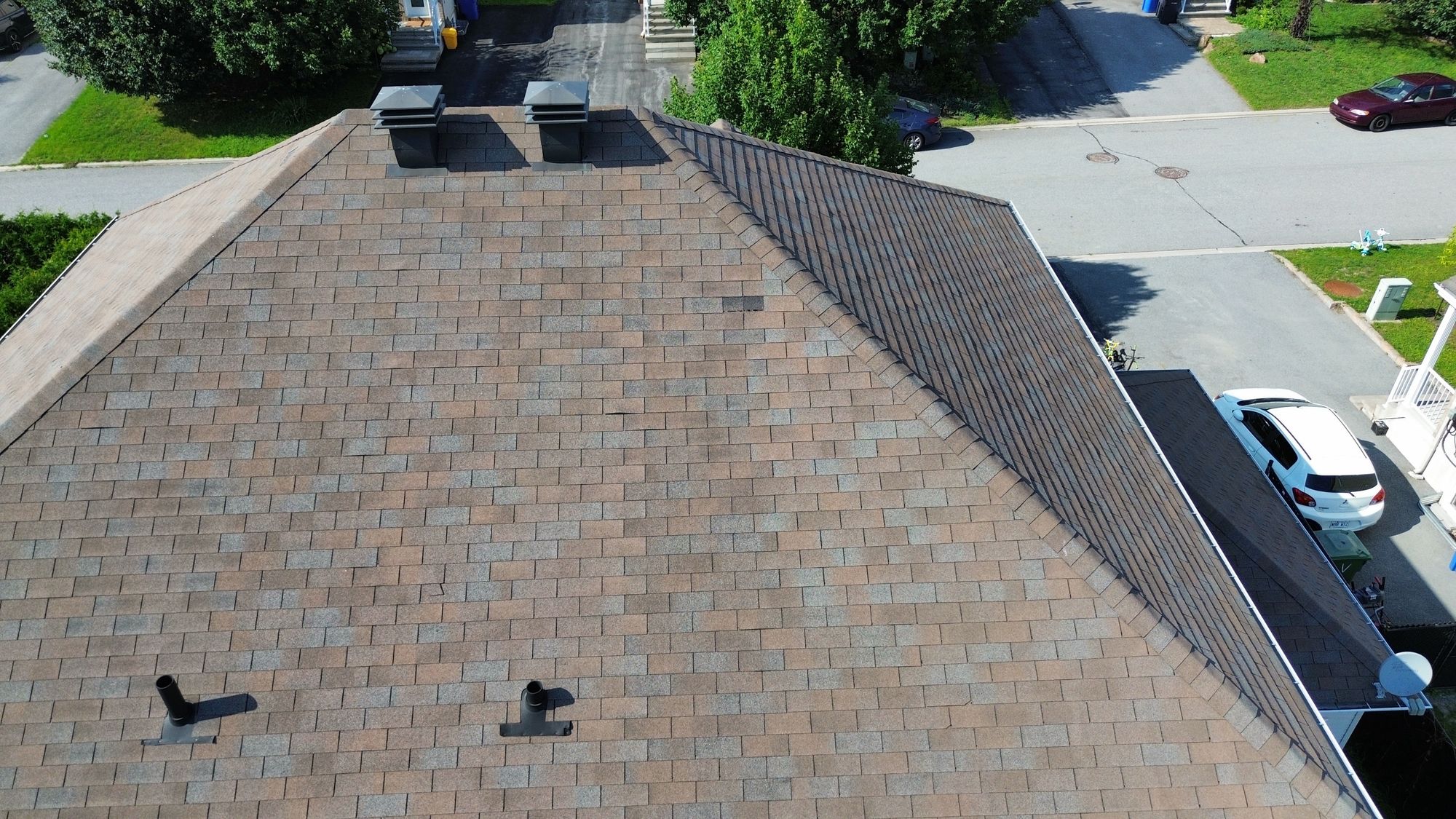
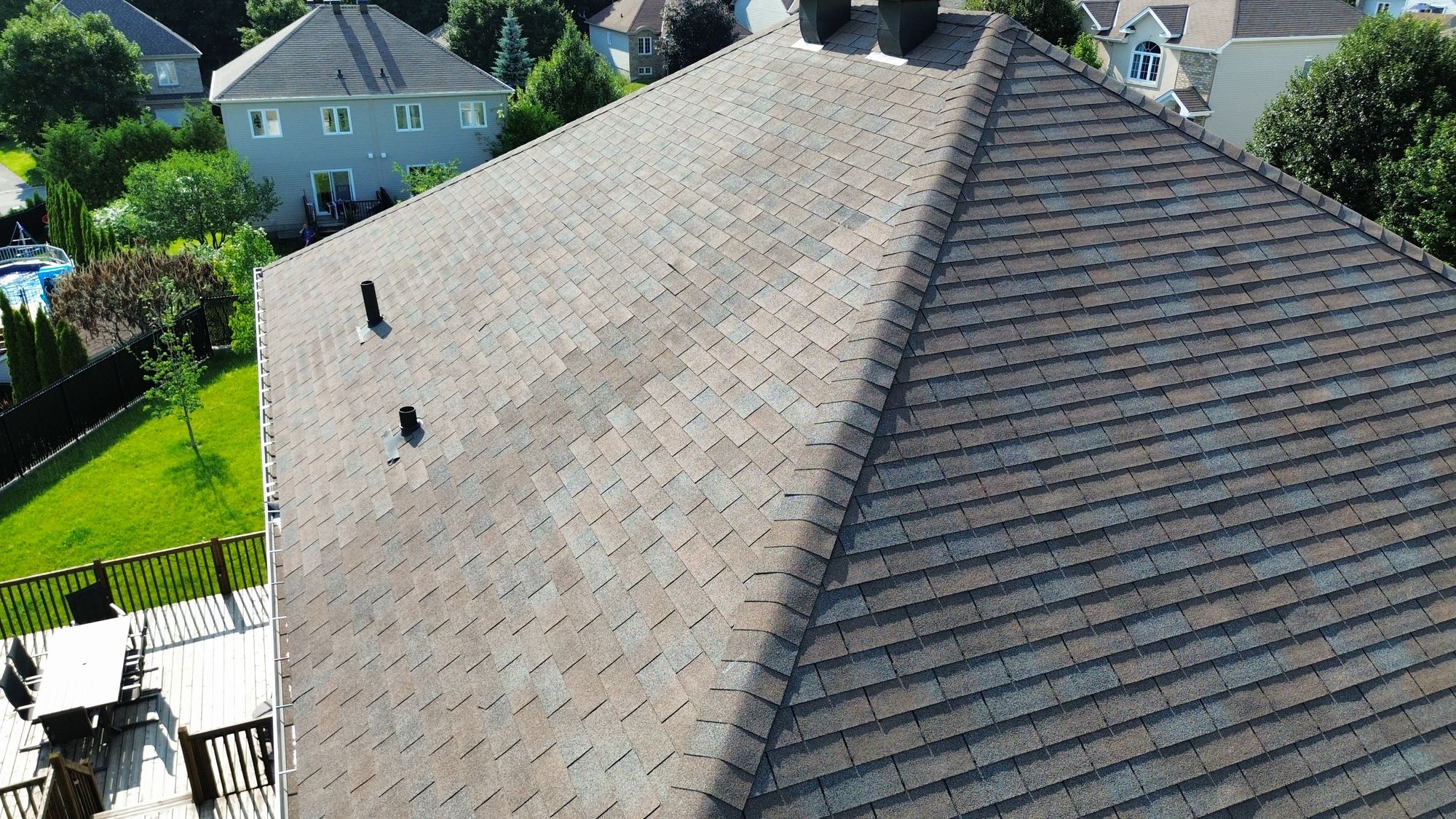
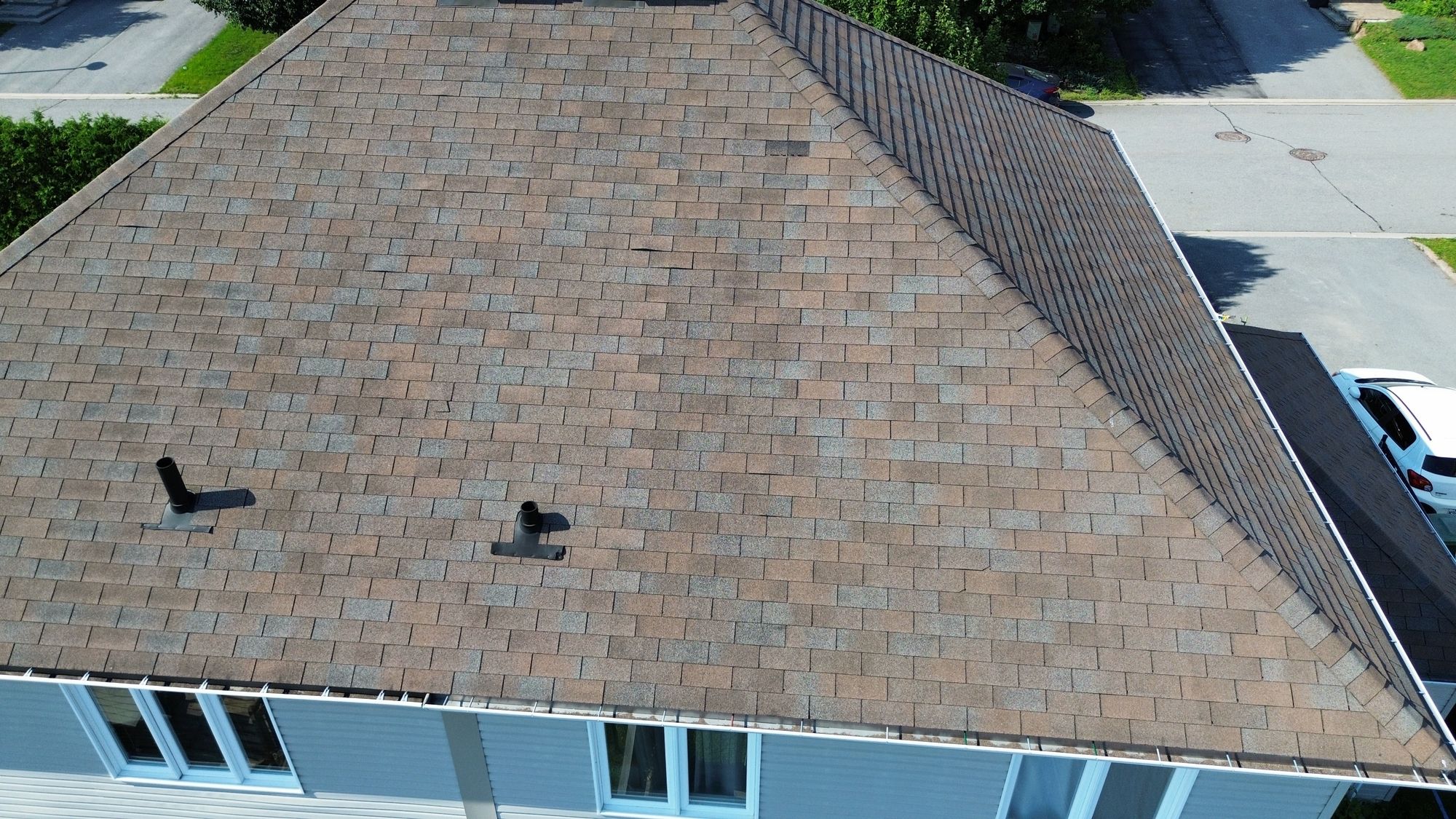
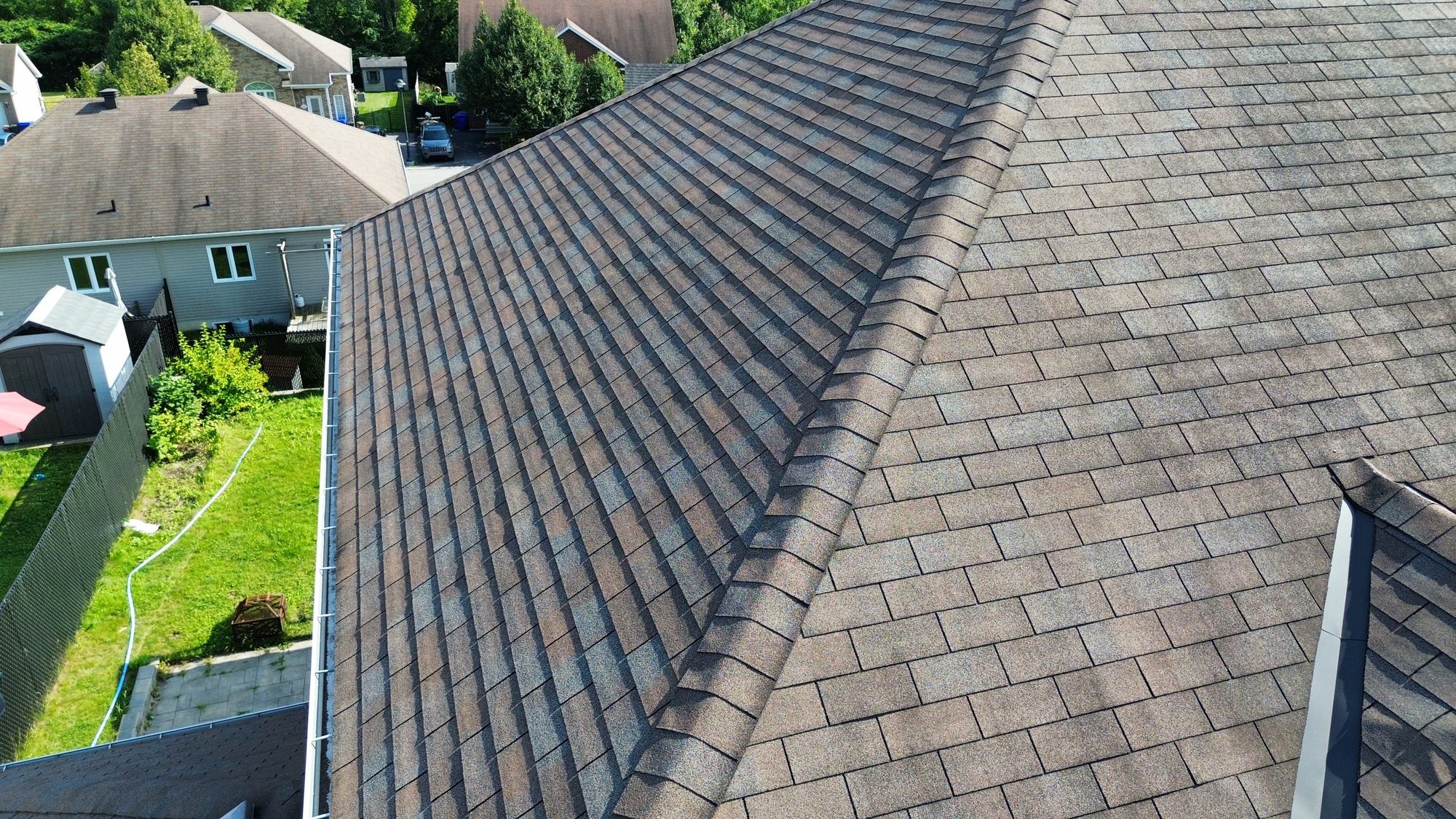
During a recent home inspection in Nepean, the roof had no active leaks, no ceiling stains, and nothing that would worry a buyer walking through the house. But a drone roof inspection of the roof surface — part of the home inspection in Ottawa — told a different story — missing and lifting shingles, visible granule wear, a section of prior repair, and exposed fasteners at the vent flashing. None of it was an emergency. All of it pointed the same direction: this roof was nearing the end of its functional life, whether or not it had started leaking yet. Because we caught it and documented it clearly, the buyer used those findings to negotiate $10,000 off the purchase price instead of quietly inheriting a roof replacement a few years down the road.
A roof doesn't have to leak to be done. These are the specific signs home inspectors look for that show a roof is aging out — and in this case, they were worth $10,000 at the negotiating table.
A Roof That Looks Fine From the Ground
From the driveway, this Nepean home's roof looked unremarkable, and inside there were no ceiling stains or musty smells — exactly the kind of roof a buyer would walk past without a second thought. That's precisely why a full roof assessment, not just a look from the ground, is part of every home inspection we usually perform as an experienced inspector in the Ottawa region. A roof doesn't send out a warning the moment it starts failing — it ages quietly for years first. After performing home inspections across Ottawa and Nepean, we've learned the roofs worth worrying about aren't always the ones that look bad. They're often the ones that look completely fine until you get eyes on the actual shingle surface.
What Home Inspectors Look For: Signs a Roof Is Near the End of Its Life
A drone roof inspection lets us look at every slope of a roof in detail — the same level of detail we use to judge whether a roof still has years left or is quietly running out the clock. Across this roof, several distinct findings showed up. None was dramatic on its own, but together they're a textbook pattern of a roof approaching end-of-life.
Why These Signs Matter Even Without a Leak
Roofs rarely fail all at once. They fail gradually — granules wear away, shingle edges curl, adhesive strips lose their grip, and fasteners work their way toward the surface over years of freeze-thaw cycles. A leak is usually the last symptom to show up, not the first, which is exactly why waiting for one before taking a roof seriously means waiting until the cheapest window to act has already closed.
- 🔓Missing or loose shinglesAn active vulnerable spot right now — the most likely place for water to eventually get through if left alone.
- 🌊Cupping and liftingA sign the shingles themselves are losing flexibility and reaching the end of their effective lifespan, not just a cosmetic issue.
- 🩹A prior repairConfirms this roof has already needed attention once — and roofs that have needed one repair often need another.
- 🔩Exposed fasteners at the flashingA smaller detail on its own, but one more point where a failed seal could let water in over time.
Individually, a home inspector might mention any one of these and move on. Found together on the same roof, they change the conversation from "keep an eye on this" to "this roof is near the end of its life" — and that distinction is exactly what turns an inspection report into negotiating leverage.
How This Became $10,000 Off the Purchase Price
A single isolated issue — one loose shingle, one small repair — rarely moves a negotiation. But a documented pattern of age-related wear is different. Because our report laid out each finding with clear photos and plain-language explanations, the buyer's agent was able to go back to the seller with specifics, not a vague "the roof looks old." The seller agreed to a $10,000 price reduction to reflect the roof's remaining life, rather than the buyer absorbing the full replacement cost alone a few years after closing. That's the practical value of catching this pattern before closing instead of after: the same findings that would have been an unpleasant surprise in three years became a bargaining chip during the conditional period, while there was still room to negotiate.
We've performed a lot of home inspections across Ottawa and Nepean, and this is a pattern we recognize immediately — a roof that isn't leaking yet, but is telling you exactly where it's headed if nothing changes. Documentation is what turns that into leverage. A vague concern doesn't move a negotiation; specific, photographed findings do. That's the difference between eating the cost of a roof replacement later and getting credit for it now.
— Evan Alkhouri, Ottawa AAA Home Inspections
TL;DR
- This Nepean roof had no active leaks, but the drone roof inspection — part of the home inspection in Ottawa — found missing shingles, cupping and lifting, a prior repair, and exposed fasteners — classic signs of a roof near the end of its life.
- Roofs fail gradually — a leak is usually the last symptom, not the first.
- Documented, photographed findings gave the buyer leverage to negotiate $10,000 off the purchase price instead of inheriting the replacement cost later.
- A full roofing assessment during a home inspection is what catches this pattern — and creates the paper trail needed to act on it — before closing.
Frequently Asked Questions
Buying a Home in Nepean or Ottawa? Know Your Roof's Real Condition First.
We've performed home inspections across Ottawa, Nepean, and the surrounding areas — we have the experience it takes to catch what a roof is telling you before it becomes a leak, and to document it clearly enough to use at the negotiating table. Roof condition is documented with photos, including drone imagery, in every report. Same-day digital reports.
Sources & Further Reading
- Natural Resources Canada — Roofing Materials & Home Envelope Durability natural-resources.canada.ca ↗
- Asphalt shingle manufacturer service-life and warranty guidance