A homeowner in Orléans called us in a panic after noticing moldy spots spreading across his second-floor ceiling. What started as an attic inspection ended with a drone survey of the roof — and three separate findings that, together, explained exactly what was going on: missing shingles, granular loss across the roof surface, and sagging sheathing between the rafters.
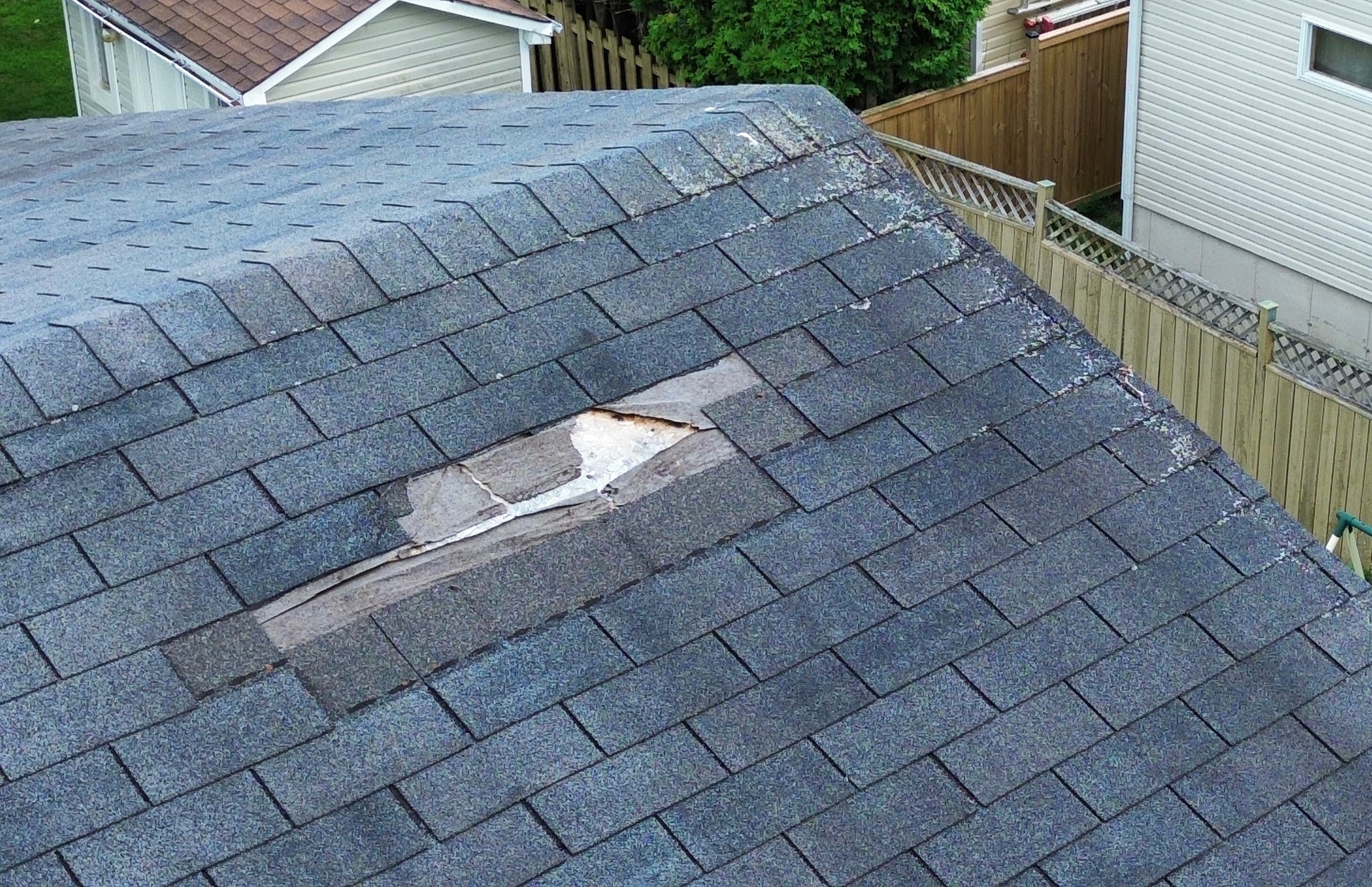
A missing patch of shingles was letting water into the attic. But it wasn't an isolated problem — the surrounding shingles were showing granular loss from age, and the sheathing underneath had already started sagging from prolonged moisture and poor ventilation. One call, three connected findings.
The Call: A Panicked Homeowner and a Moldy Ceiling
The homeowner's message was the kind every home inspector recognizes immediately — moldy-looking spots had appeared on the ceiling of a second-floor room in his Orléans home, and they seemed to be getting worse. Ceiling stains like that are almost never the actual problem. They're a symptom, and the real cause is usually somewhere above — in this case, the roof.
Starting in the Attic
Before going anywhere near the roof itself, the inspection started from below, in the attic directly under the affected ceiling area. This is standard sequencing for a reason: the attic view often narrows down roughly where a leak is entering before a single shingle has been looked at from outside.
From inside the attic, there were early signs pointing to a chronic moisture issue rather than a single recent event — which set the expectation that the roof survey to follow would likely turn up more than one finding.
Taking to the Air: What the Drone Revealed
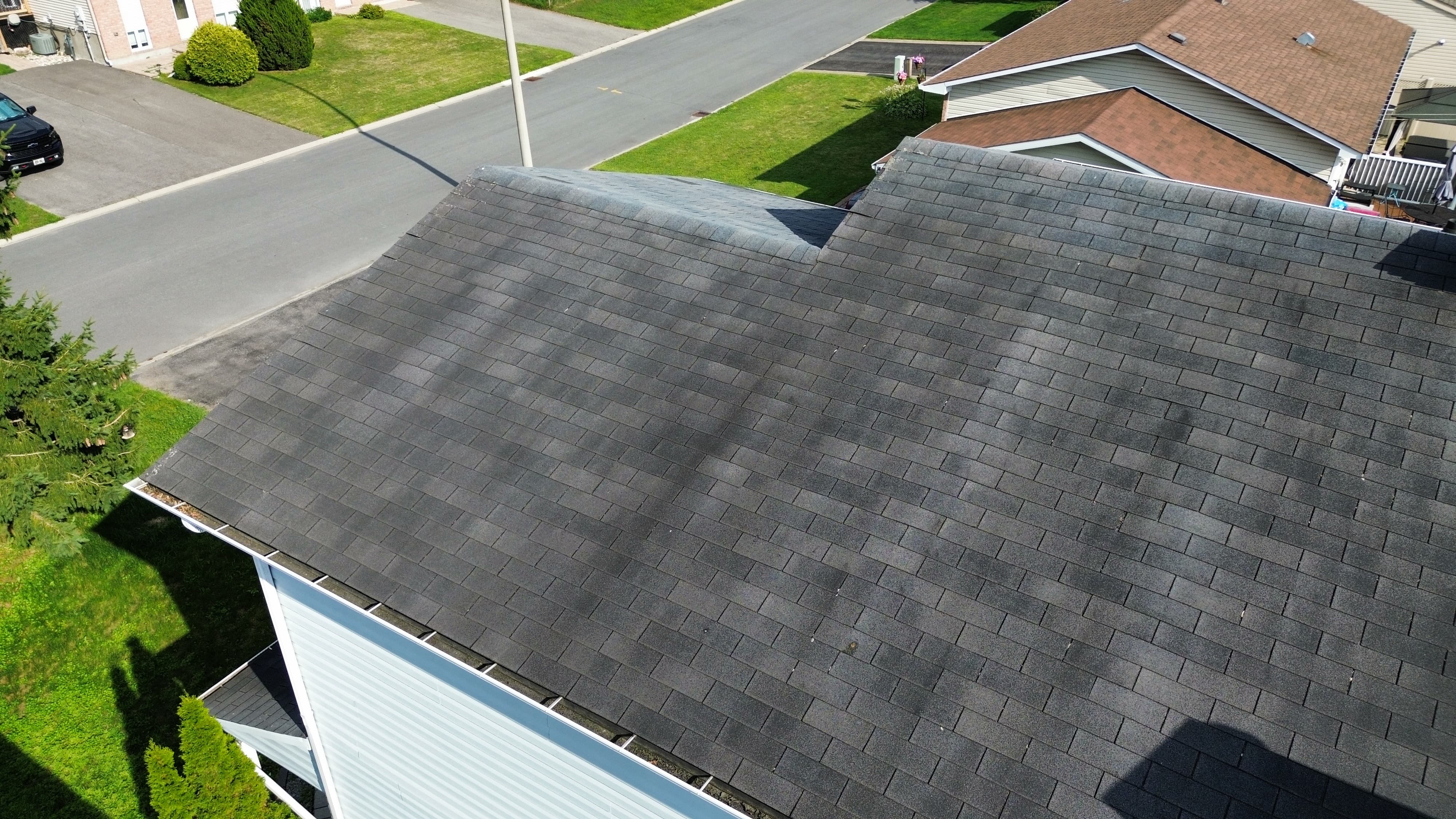
With a general area identified from the attic, the next step was a full drone survey of the roof. This is exactly the kind of situation drone inspections are built for — surveying an entire roof plane in detail without the safety risk of walking a residential roof, and catching damage that's easy to miss from a ladder at the eaves.
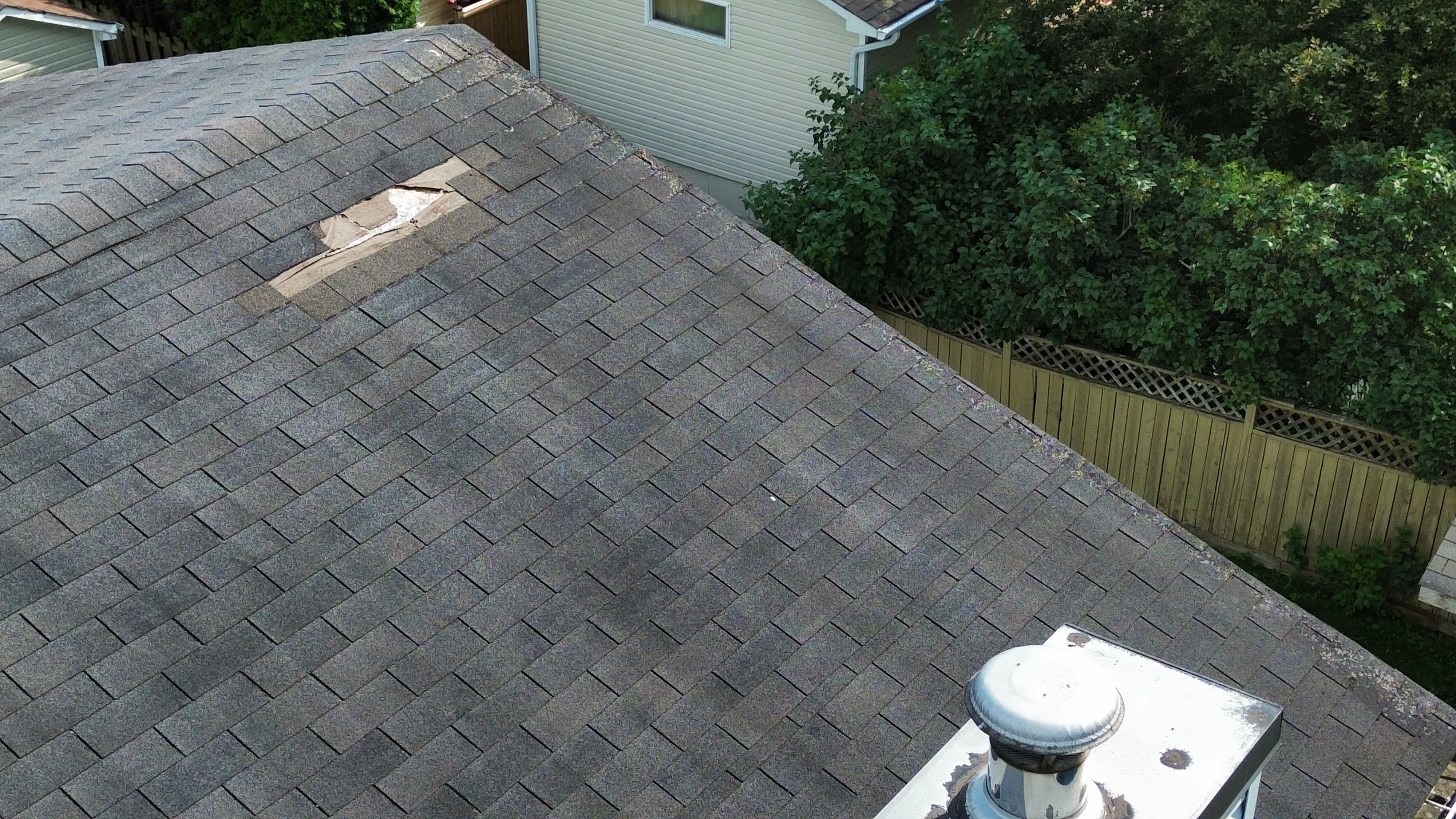
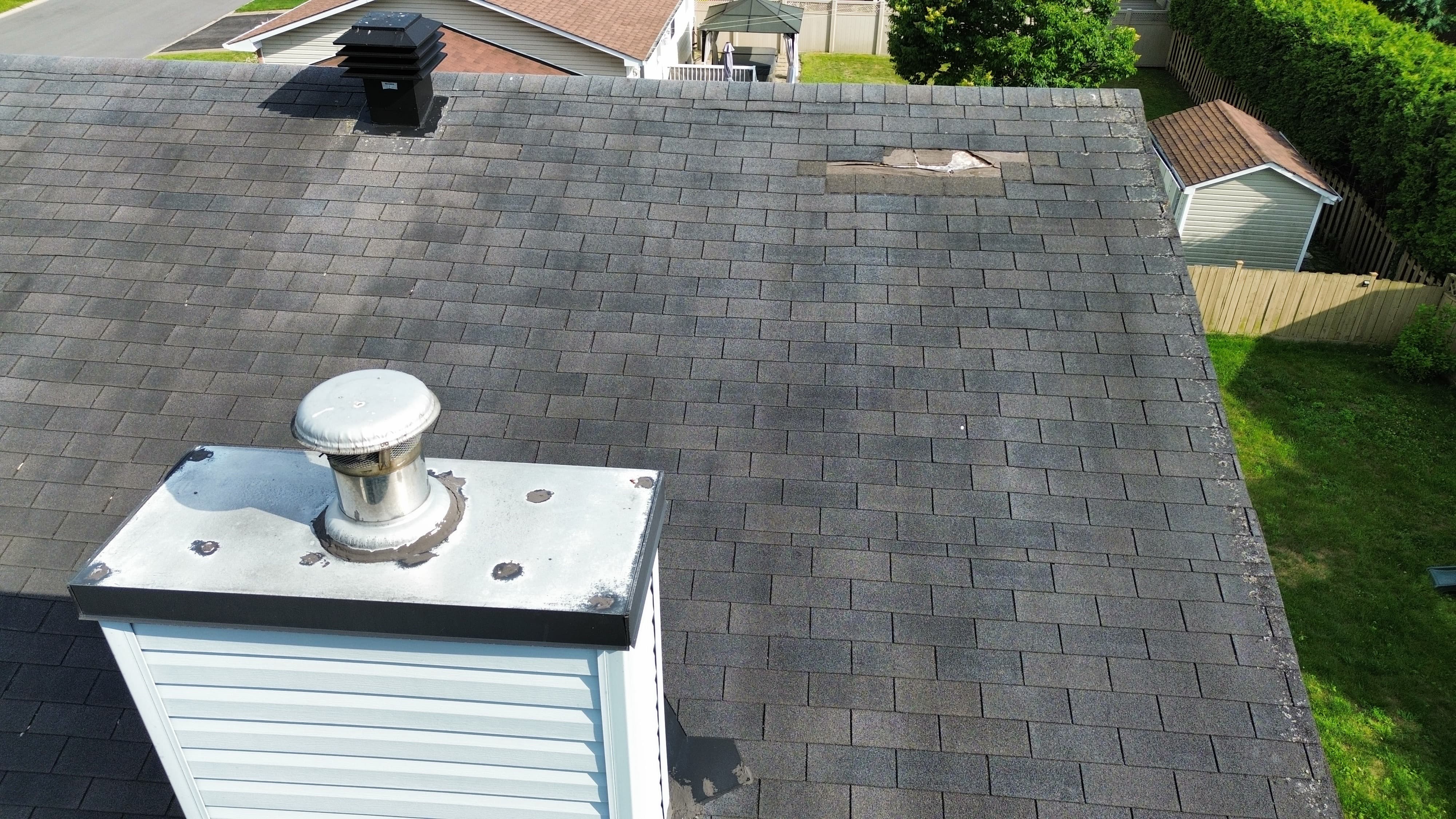
The drone located it quickly: a patch of shingles missing outright, with the underlayment exposed directly to the weather.
The Findings, Together
Once the full roof and attic picture came together, three separate but related issues stood out:
- 🕳️Missing shinglesA section of shingles was gone entirely, leaving the underlayment exposed. This was the direct, active entry point for the water reaching the ceiling below.
- 📉Granular loss across the roofThe shingles surrounding the damaged area were showing noticeable granular loss — the protective mineral surface wearing thin. That's a sign the roof as a whole is aging toward the end of its service life, not just dealing with one bad patch.
- 🏚️Sagging sheathing between the raftersIn the attic, the roof sheathing was visibly sagging between rafters — typically a sign of elevated humidity and inadequate attic ventilation over time, sometimes compounded by moisture the sheathing has already absorbed.
What This All Means Together
Individually, any one of these findings would be worth flagging. Together, they tell a more complete story: this wasn't a fresh, isolated problem caused by one storm. The missing shingles created the active leak, but the granular loss and the sagging sheathing both point to a roof and attic system that had been under stress for a while before the ceiling ever showed a spot.
That distinction matters for what a homeowner does next. A single missing shingle can sometimes be a straightforward, inexpensive repair. A roof that's also showing widespread granular loss and ventilation-related sheathing issues is a different conversation — one about the remaining service life of the whole roof, not just patching the one visible hole. That's the kind of full picture a roofing assessment during a home inspection is meant to catch, alongside a look at attic insulation and ventilation, since the two systems affect each other directly.
This is a good example of why we always start in the attic before we ever send the drone up. The ceiling stain told us something was wrong, the attic told us roughly where, and the drone confirmed exactly what. If we'd only looked at one of the three — the ceiling, the attic, or the roof surface — we'd have missed part of the story. The missing shingles were the obvious fix, but the granular loss and the sagging sheathing were the part the homeowner actually needed to know about before deciding what to do next.
— Evan Alkhouri, Ottawa AAA Home Inspections
TL;DR
- Ceiling mold on a second floor is almost always a symptom — the real problem is usually above, somewhere between the ceiling and the roof itself.
- Missing shingles left the underlayment exposed, creating a direct path for water to enter.
- Granular loss across the surrounding shingles signals the roof is aging, not just dealing with one damaged spot.
- Sagging sheathing between the rafters usually points to attic humidity and ventilation problems, not just the leak itself.
- A combined attic and drone roof inspection is what connects all three findings into one clear picture.
Frequently Asked Questions
Noticing Ceiling Stains or Suspect Your Roof Is Nearing the End of Its Life?
Roof condition, attic ventilation, and signs of moisture intrusion are documented with photos — including drone imagery when needed — in every report from Ottawa AAA Home Inspections. Same-day digital reports, serving Orléans, Ottawa, Gatineau, and surrounding areas.
Sources & Further Reading
- Natural Resources Canada — Roofing Materials & Attic Ventilation Basics natural-resources.canada.ca ↗
- Manufacturer shingle service-life and granular loss guidance (product-specific; verify against the actual installed shingle brand before publishing)